A quilt is, essentially, a sleeping bag with the back and hood cut away — and that missing panel has sparked more campsite debate than almost any other piece of kit. The right answer depends on how you sleep, where you pitch and whether you're carrying your shelter for miles or lifting it out of the boot. Here's a straight comparison for a British three-season, from a cold March night in the Lakes to a mild, drizzly October on Dartmoor.
Insulation only works where it's lofted. Whether it's down or synthetic, the fibres trap air, and trapped air keeps you warm. Under your body, insulation is crushed flat and contributes almost nothing — which is why your sleeping mat matters more than the difference between a bag and a quilt. A quilt simply admits that, and puts the fill where it can expand: over you.
Quilts give up some warmth at the neck and along the edges, since there's no hood and no back panel to seal you in. But attached properly to a pad, a quilt with the same amount of fill as a bag often feels as warm, and sometimes warmer, because nothing is wasted underneath you. The catch is those two words: attached properly.
Sleeping bags sold in the UK are usually labelled to the EN/ISO temperature standard, which gives a comfort, limit and extreme figure. Quilts rarely are; most makers publish their own comfort estimates instead. Treat an untested number with suspicion, and add a margin if you sleep cold. A rating is a guide, not a promise.
Whichever you choose, spend on the mat first. For a UK three-season, a pad with a decent R-value isn't a luxury — it's half the system.
You sweat at night, and in a sealed bag that vapour has to travel through the insulation and the shell before it escapes. On a cold, damp British night, the dew point often lands inside the bag — somewhere near the foot, or along the zip. Once down is damp, it stops lofting.
A quilt vents constantly. The edges breathe, the footbox can be opened, and you can throw a leg out when you've overheated at 3am without wrestling with a zip in the dark. Over four or five nights in Snowdonia or the Cairngorms, that ventilation is the difference between insulation that stays dry and insulation that slowly clags. Synthetic fill copes with damp better than down; treated down copes better than untreated.
A quilt is warmer than a bag right up to the moment you roll off your mat.
Handled well, the trade is simple: quilts manage moisture, bags manage draughts. If you're a restless sleeper who ends up diagonal on the pad, a bag forgives you. If you can lie still and keep your straps tight, a quilt is drier and lighter.
On paper, the quilt wins. No back panel, no hood, no zip and less fabric typically mean a saving of a few hundred grams for the same warmth, and a smaller bundle in your pack. Over a long day in the Highlands, that's noticeable.
The saving can evaporate, though. A quilt needs a wide, well-insulated pad, straps, and often a hooded layer to replace the hood. Add all that and a lean bag with a half-zip and a decent hood comes very close. Compare complete systems, not just the item on the hanger.
If you sleep on your side or front, the case for a quilt is strong. A bag twists around you when you turn; a quilt stays flat on the pad and you rotate inside it. Back sleepers tend to prefer a bag, because a hood is genuinely good at keeping the neck warm and the pillow in place.
Quilts also pull double duty. Use one as a blanket at camp, drape it over two people, or open it flat in a bothy. A bag can usually be unzipped into a quilt shape, but the hood and the zip flap tend to leave it draughty and awkward.
Down is the biggest cost driver in either format, followed by shell fabric and labour. Because a quilt uses less material and skips the zip, hood and some hardware, a well-made down quilt is often cheaper than a comparable bag from the same maker. What you lose is choice: fewer UK stockists, less chance to try one before buying, and a thinner secondhand market if you decide to sell on. Popular bags hold value and turn up used in good condition.
Budget-wise, a synthetic bag remains the cheapest route into three-season camping. It's heavier and bulkier, but it tolerates damp and a bit of neglect, which suits car camping and occasional summer trips.
Get the pad right first, then decide the shape. Borrow or hire before you buy if you can, and try it in the garden on a cold night — a test that costs nothing and tells you more than any review.
A few habits pay off whatever you carry: pitch out of the wind and away from valley bottoms where cold air pools; eat something before bed; fill a bottle with hot water and tuck it near your feet; wear dry base layers and a hat rather than every layer you own. If you wake cold and can't warm up, add insulation, eat, and move around a bit. Cold and hungry spiral quickly.
Finally, keep the down dry and read the forecast properly before you go. A British three-season night can throw wind, rain and a frost at you in the same week — and the kit that works is the kit you know how to use.
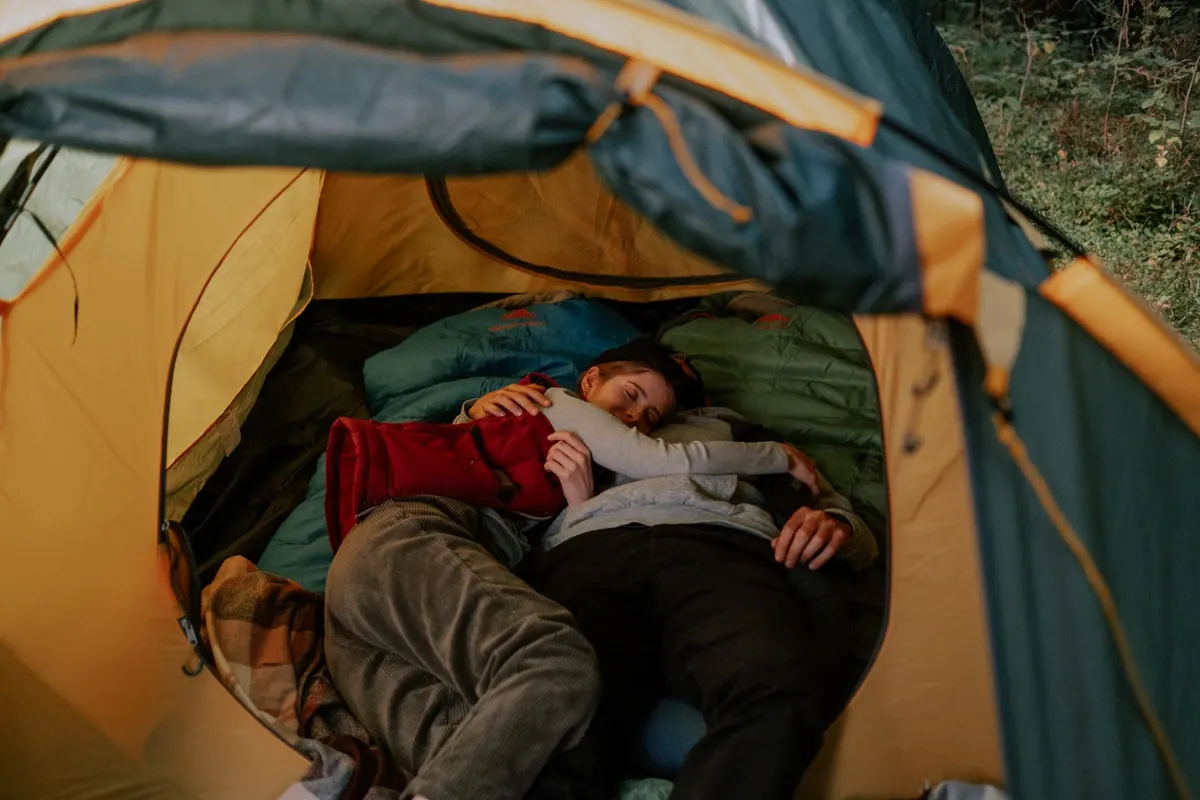
Photo: cottonbro studio / Pexels