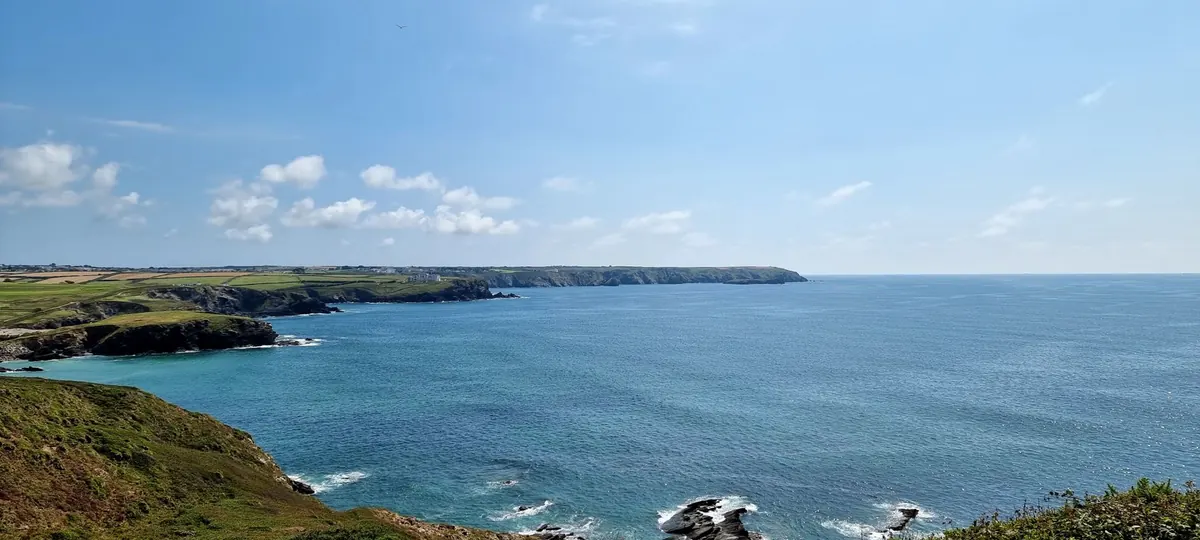
Somewhere past the third headland, the path stops being a view and becomes a negotiation. The ground is loose, the climb is steeper than the map suggested, and your right heel has started to complain. Nothing dramatic — just the slow arithmetic of a coastal day: feet, weather, tide, and how far it is to the next bus stop.
Coast path walking rewards planning more than fitness. Choose a sensible section, get the mileage and the transport right, and look after your feet from the first mile, and you can finish a week tired rather than wrecked.
Coastal miles are slower than inland miles. A ten-mile day on the north Cornwall coast can involve more climbing than a fifteen-mile day on a flat towpath, and two miles an hour including breaks is a realistic average for most walkers carrying a pack.
For most people, eight to twelve miles a day is the sweet spot. Sixteen-mile stages are possible, but they leave no room for a wrong turn, a slow ferry or a long lunch — and they are usually the days that produce blisters.
Look at the total climb for each stage. Four hundred metres of ascent spread over ten miles is a pleasant amble; the same distance with twice that is a full day out. Route guides, Ordnance Survey maps and most walking apps give a profile, so use it to spread the steep days out instead of stacking two of them back to back.
Before you book anything, do one long local walk with a loaded rucksack on similar ground. Ten hilly miles will tell you more about your real daily limit than any training schedule.
The coast path rarely runs through places with a railway station. Villages often sit a mile or two inland, buses can be infrequent, and some stretches are only reachable on foot or by boat. Plan so that each day starts and ends somewhere a bus, train or ferry actually stops.
A few tactics work well:
Estuary crossings are the classic coast path snag. Some ferries are seasonal, some run only in daylight, some stop altogether in winter, and a few operate on demand — you hail the boatman from the slipway. Padstow to Rock, the Salcombe and St Mawes ferries and the King Harry Ferry all shape a day's plan rather than being a detail you sort out on the morning.
Tides matter even without a ferry. A handful of beaches, coves and causeways are cut off at high water, and storm damage occasionally closes a cliff section for months. Get tide times for the nearest harbour rather than the nearest big town, and arrive at any tidal stretch with a margin. Never race a rising tide along a beach; take the inland path instead.
Blisters end more coast path trips than bad weather does. The fix is boring and effective.
If you have diabetes, circulation problems or a wound that is not healing, speak to a professional before you set off. Persistent foot pain is not something to walk through.
Start earlier than feels natural. A nine o'clock start with a twenty-minute break every two hours and a proper half-hour lunch will get most people over ten coastal miles well before the evening. Eat and drink more than you think you need, and carry salty snacks as well as sweet ones.
Walking poles earn their keep on the endless descents into coves. They take load off knees and help on wet stone. And finish while you still have something in the tank — a short afternoon beats a heroic last two miles in the dark.
Coast paths are exposed. Wind, sea fog and driving rain arrive quickly, and a cliff-top path in a gale is no place to test your waterproof. Carry a waterproof jacket and a spare warm layer even on a good forecast, and know your bail-out points: a bus stop, a village, a valley path heading inland.
If visibility drops or the wind becomes hard to stand up in, drop to a lower route or stop for the day. The path will still be there next week.
Pick a three- or four-day stretch with a bus or train at each end, then work through this before you go:
Do that and the coast path gives you what you came for: long views, salt air, a serious appetite, and the particular satisfaction of arriving somewhere under your own steam
Photo: Abdullah Faruque / Pexels