There is a moment on your first multi-day walk when the day-trip mindset falls away. You still have two hours of walking left, the light is going gold, and the only thing you need to manage is your own two feet. That shift — from a route you could finish by lunchtime to one that takes days — is what makes a long-distance walk memorable, and it is also what catches beginners out. Almost all of it can be planned for.
Lots of people pick the West Highland Way or the Coast to Coast because they have heard of them, then discover days of 30 km with 1,000 m of climbing. Better to start with something shorter and gentler and work up to the famous ones.
Good first candidates include the South Downs Way, Hadrian's Wall Path, the Norfolk Coast Path, the Dales Way, or two or three sections of the Cotswold Way. A linear route with villages every few kilometres is ideal: if day two goes wrong, you can reach a bus stop or a station and go home with your dignity intact.
Look for three things. A daily average under 20 km. Villages, roads or a station at least every 10–15 km. And terrain you have partly walked before, so the ground underfoot holds no surprises. On access: in Scotland you can walk across most open land under the Scottish Outdoor Access Code; in England and Wales you are largely on public footpaths, bridleways and permissive paths, so keep to them and close gates behind you.
Day one should be shorter than you think you can manage. The pack is unfamiliar, boots rub, and you will stop more often than you expect. A realistic first target is 12–16 km with up to 400 m of climbing. On flat, easy-going canal or coastal paths you might stretch to 20 km.
For estimating time, use a rough rule of thumb: allow an hour for every 5 km, plus about half an hour for every 300 m of ascent. So 16 km with 400 m of climb comes out at roughly four hours and forty minutes of walking before you count stops. Add an hour for lunch, photographs, sock adjustments and a wrong turn, and you have a good six-hour day. That is plenty.
Plan each day to finish by late afternoon, with daylight to spare. Do not schedule three consecutive days at maximum capacity — day two is usually the hardest, and the last hour is always the longest.
Plan the day you can still walk at four in the afternoon, not the day that looks impressive on the map.
A 30–40 litre rucksack is enough for a three-day trip staying in hostels, bunkhouses or B&Bs. If you are carrying camping kit, you will want 50–60 litres, and you should think hard about whether that is the right first trip. Aim to carry no more than about a tenth of your body weight where you can, and test everything on two or three full-day walks before you go — not the week before.
If your route crosses high or remote ground, a navigation course or a guided first trip is money well spent. Footpaths are easy; cloud, darkness and tiredness are not.
Village pubs, cafés and shops are the backbone of a UK multi-day walk, but they are not evenly spaced. Before you set off, mark on the map where you can buy a meal, and carry a day's worth of food you would be happy to eat cold. Oats, nuts, dried fruit, flapjack, cheese, bread and a flask are reliable companions.
Refill water wherever you can — cafés, pubs, public taps, some churchyards. Treat water from streams and rivers unless you are high up and confident of the source, and always be cautious near farmland or lowland settlements. If in doubt, filter or purify. On health matters, take advice from a pharmacist or GP about anything specific to you.
YHA and independent hostels, bunkhouses, B&Bs, village inns and campsites all work. On some long-distance trails, baggage transfer services will move a bag between stops, which changes the whole feel of a trip — worth investigating if you would rather walk with a day pack.
In Scotland, bothies are free, basic and unbookable, and wild camping is permitted under access rights if you camp in small numbers, away from enclosed fields and buildings, and leave no trace. In England and Wales, wild camping generally requires the landowner's permission. Book summer weekends and popular trails weeks or months ahead; on quieter routes, a day or two of notice usually suffices. Earplugs are a small luxury in a dormitory.
Tell someone your route, your overnight stops and when you expect to finish. Check the mountain forecast for upland days, and be willing to shorten a day or take a lower route. Know your escape points before you need them.
Phone signal is unreliable in many upland areas. A paper map and the ability to read it are your primary tools. In an emergency in the UK, dial 999 or 112, ask for the police and then for mountain rescue; a location app that shares your exact grid position saves valuable time. Carry a head torch even on short days, and set a turn-around time on any summit attempt and stick to it.
Pick a three-day route of roughly 40–45 km with accommodation booked at both ends of each stage. Walk two full days with a loaded pack beforehand. Pack on the Monday, check the forecast on the Thursday, and leave a copy of your plan with someone at home.
Then keep the first day deliberately short, eat properly at lunch, and stop when the plan says stop rather than pushing on to a village you can see on the map. The point of a multi-day walk is not the distance. It is arriving at the other end still enjoying yourself, with sore feet and a few good stories — and already wondering where to go next.
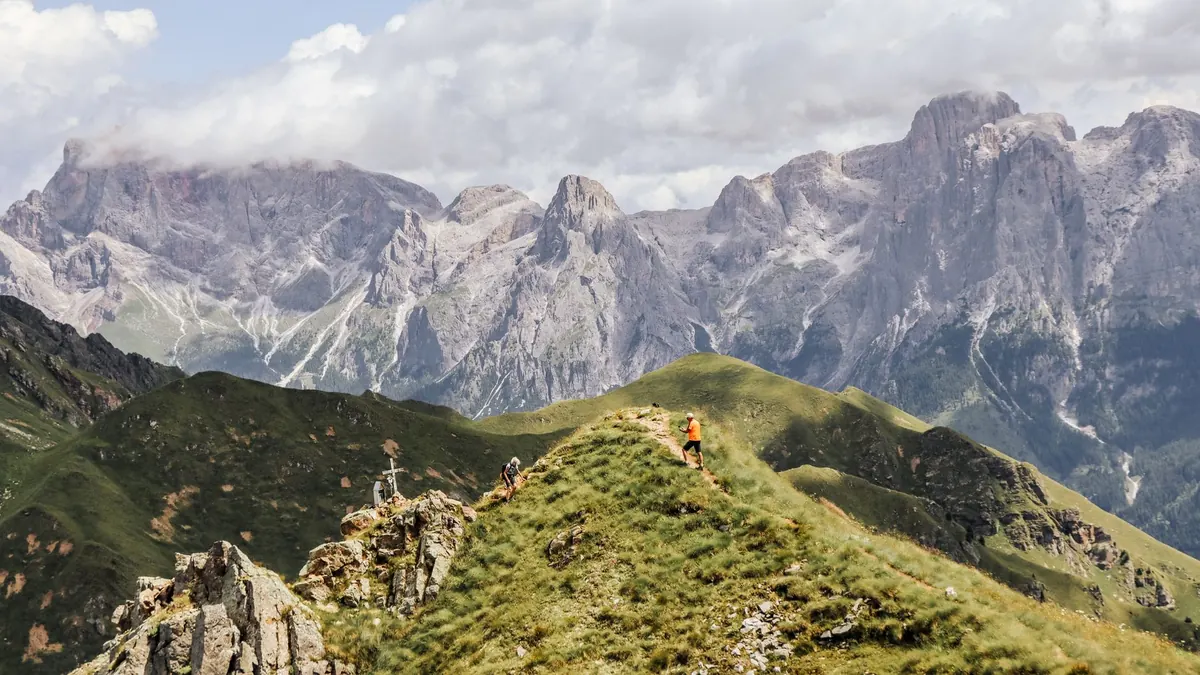
Photo: Jędrzej Koralewski / Pexels