Scotland and England share a border, a language and a great deal of rain, but they do not share a law on sleeping out. Cross the line at Carter Bar with a tent on your back and the rules change completely: north of it you are exercising a statutory right, south of it you are usually a guest who has not been invited. Knowing which side of that line you are on saves awkward conversations with farmers, rangers and the occasional police officer — and it makes for a far better night's sleep.
Here is how the two systems differ, and how to pitch well in both.
In Scotland, the Land Reform (Scotland) Act 2003 created a statutory right of responsible access to most land and inland water, and wild camping sits within that right. Camp in small numbers, on unenclosed ground, for a night or two, without causing damage, and you are within the law. You do not need anyone's permission.
England has no equivalent. Wild camping on private land without the owner's consent is a civil trespass. That is not the same as a criminal offence, and you will not be arrested for pitching a tent on a fell, but the landowner or their agent can ask you to move on and you should do so at once, politely, without argument. A handful of places — railway land, Ministry of Defence ranges, sites covered by specific byelaws — carry sharper consequences, which is reason enough to know where you are.
The right is broad, not unlimited. Enclosed fields, land growing crops, ground holding livestock, gardens and the immediate surroundings of buildings are all excluded. So is land closed temporarily for safety or management reasons.
Read the Scottish Outdoor Access Code before your trip. It is short, free to find online, and it is the document a ranger will point to if you are challenged.
The Cairngorms, Torridon, Fisherfield, Knoydart, Assynt, the Angus glens and the rolling Southern Uplands all offer legitimate ground. Look for a flat, well-drained pitch out of sight of houses and roads, and away from loch shores where erosion and litter tend to concentrate. Camp high enough to catch a breeze if the midges are out, but low enough that you are not perched on an exposed ridge when the wind gets up at two in the morning.
Dartmoor has long been the exception people cited. The assumption that the Dartmoor Commons Act granted a right to camp was tested in the courts, and the outcome was restrictive. The national park authority has since moved to a permitting arrangement on some commons, so check its current guidance rather than trusting a forum post from three summers ago.
Elsewhere — the Lake District, the Peak District, the North York Moors — a single small tent high on open fell, pitched late and struck early, is often tolerated rather than permitted. Tolerance is not law. It varies from estate to estate and keeper to keeper, and it can be withdrawn.
If you want certainty in England, ask. A knock at a farmhouse door or an email to the estate office often secures a yes for one night in the corner of a field, especially outside lambing and harvest. Forestry England land, some national park sites and plenty of campsites offer simple backpacker pitches for a modest fee — occasionally the most restful option when you have walked twenty miles.
The habits that keep wild camping quietly acceptable are the same in both countries.
Scotland's access rights survive because enough people use them well. Pitch small, stay briefly, take everything home and you are part of the reason those rights remain. Carry that same standard into England and you will rarely be unwelcome, even where the law gives you no right to be there at all.
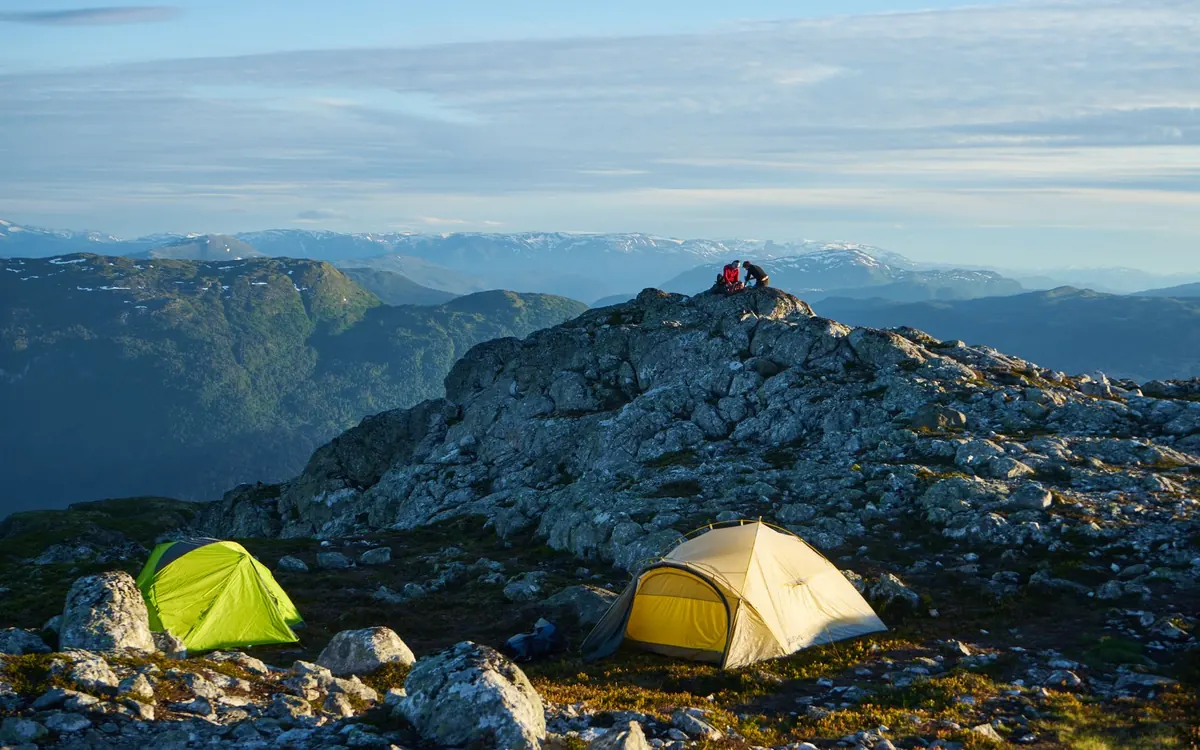
Access rules, byelaws and permitting arrangements do change, and they vary locally. Check the Scottish Outdoor Access Code, the relevant national park authority and on-the-ground signs before you travel. This is general guidance, not legal advice.Photo: Lukas Seitz / Pexels